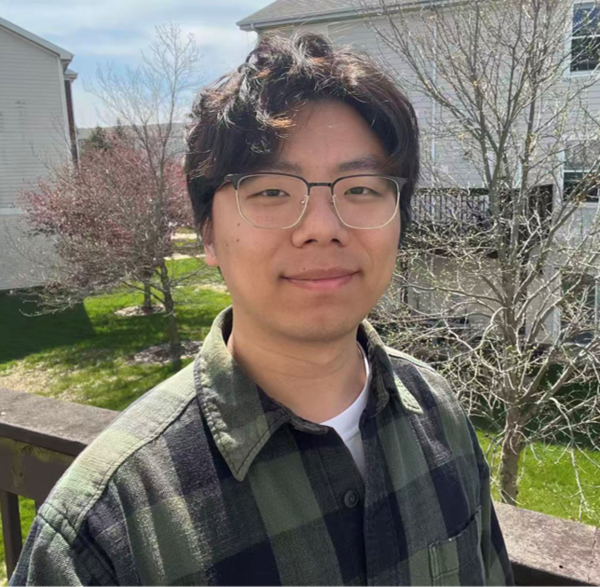
Seminar Speaker: Songning Wang, Ph.D. Student, University of Illinois Department of CliMAS
- Sponsor
- Professor Jeff Trapp
- Views
- 22
- Originating Calendar
- CliMAS Colloquia
Future Climate Projections of Hazardous Convective Weather Using an Ensemble of Environment-informed, Convection-permitting Dynamical Downscaling Simulations
Convection-permitting dynamical downscaling (CPDD) allows for an explicit representation of the convective storms that generate tornadoes, hail, severe thunderstorm winds, and locally heavy precipitation. Possible changes in such hazardous convective weather (HCW) due to human-induced climate change are therefore projected with higher confidence using CPDD than with analyses of relatively coarse global climate models (GCM). However, due to the computational expense, CPDD-based future projections of HCW have tended to be based on a single experiment rather than an ensemble of experiments which allow for assessments of uncertainty. Herein we present “environment-informed” CPDD as a means to efficiently generate a CPDD ensemble driven by different GCMs. This variant of CPDD is applied only to a subset of days and geographical domains over which the meteorological conditions potentially favor supercell thunderstorms, which are the most frequent generators of significant HCW in the United States. The temporal and geospatial occurrence of supercells over the United States is demonstrated from the perspective of environment-informed CPDD as applied to eight different GCMs and the ERA5 reanalysis. Such occurrences vary considerably from downscaled GCM to GCM, thus demonstrating the value of an ensemble. Two bi-decade epochs, 1995–2014 (historical) and 2040–2059 (future; SSP585), are considered for the projection. Based on the ensemble mean, future supercell occurrence is projected to be most frequent over an area centered on the Missouri Bootheel. An earlier-start to the annual cycle of HCW risk is also projected. As for tornado, the historical simulations well reproduce the geospatial distribution of EF1+ tornado reports. Geospatially, tornado proxy occurrences and outbreaks increase in the future in the region extending northward through the southeast U.S. region into the Midwest. Temporally, the inter-annual variability in proxy occurrences is larger in the future. And seasonally, spring (March-April-May) contributes to the largest future increase, within a seasonal cycle that indicates an earlier start of the tornado season by approximately a week. The results from this study provide insights into the shifting geographical and seasonal risks of HCW, offering a reference for emergency management, infrastructure resilience, and long-term climate adaptation strategies in the most vulnerable regions of the United States.
ZOOM: https://illinois.zoom.us/j/82093903213?pwd=SC7WAE6OPDRxFHHHSI9WGEMadb894t.1
Meeting ID: 820 9390 3213 Passcode: 372504