- Sponsor
- CEE 595AG - Environmental Engineering & Science
- Speaker
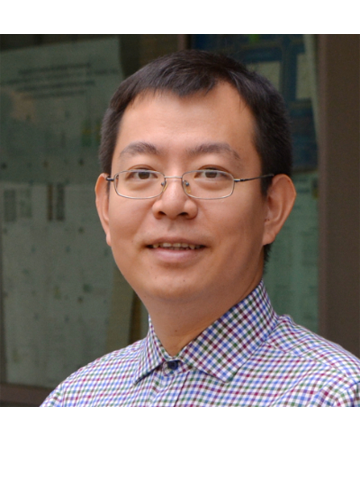
- Dr. Jinyong Liu - University of California Riverside
- Originating Calendar
- CEE Seminars and Conferences
Abstract
When the USEPA issued the first drinking water health advisory level for PFOA/PFOS in 2016, no technology was ready to degrade PFAS in real-world samples, and academia often described PFAS as “forever chemicals”. The original UV-sulfite treatment was cited as a highly energy-intensive example to support the “need for developing novel technologies”. Because UV irradiation on the sulfite anion generates a hydrated electron for the initial PFAS degradation step, the UV/sulfite treatment was also simplified as an “advanced reduction process”. In this seminar, I will share research stories from my lab that completely changed the situation. First, through pH adjustment, iodide addition, and reactor optimization, an energy consumption index (EE/O) for PFOA decreased from >150 to <0.5 kWh/m3, and the maximum defluorination level increased from <60% to >95%. Second, we have substantially updated the reaction mechanism from “reductive defluorination” to a stepwise process involving three key species: hydrated electron, hydroxyl radical, and hydroxide ion. Third, integrating pre-treatment and post-treatment steps, without using fancy materials, is crucial for energy efficiency and complete destruction of PFAS and other pollutants in complex samples. As a result, academia has reduced the frequency of using “forever chemicals” in recent years. With these examples, I will further discuss the need for, and ways to, accelerate research progress for future environmental pollution challenges.
Speaker Bio
Dr. Jinyong Liu is currently an Associate Professor and Won & Insook Yoo Endowed Chair of Environmental Engineering at the University of California, Riverside. He received his Bachelor’s degree in Chemistry and Master’s degree in Environmental Science & Engineering from Tsinghua University and his Ph.D. degree in Environmental Engineering from UIUC (advisors: Timothy Strathmann, Charles Werth, and John Shapley). Current research topics include (i) PFAS degradation, (ii) oxyanion reduction, and (iii) transition metal chemistry for environmental applications. Over the past ten years at UCR, Dr. Liu has advanced both the mechanistic understanding and system performance of PFAS degradation through photochemical (e.g., UV/sulfite) and novel reductive technologies with metal species. Dr. Liu also explored the Periodic Table, identifying various transition metals and their ligand-coordinated complexes (e.g., Mo, Re, Ru, Cr, V) to reduce recalcitrant oxyanion pollutants (e.g., perchlorate). Besides publications in the ES&T series, Nature Water, and chemistry journals (ACS Central Science, JACS, Inorganic Chemistry, ACS Catalysis), his lab has multiple patents licensed and demonstrated by industry partners. He developed multiple water engineering courses from scratch and integrated his research findings into them each year. His students have received prestigious research awards, including the AEESP Outstanding Doctoral Dissertation Award, ACS C. Ellen Gonter Environmental Chemistry Award, ACS Undergraduate Award in Environmental Chemistry, and the Regeneron International Science and Engineering Fair for high school students.