- Sponsor
- School of Art and Design
- Originating Calendar
- A+D Student events
Art History Visiting Lecture
Angela Miller
Artists and Writers on Fire Island in the Era of Global War
Thursday, December 3, 5:30pm | Levis Faculty Center 210“Queer is an attitude of mind and of life.”
-Tilda SwintonThis talk will explore the shared lives and works of a circle of queer artists and writers in the years around World War II. Based in New York City and Fire Island, Paul Cadmus, Jared and Margaret French, George Platt Lynes, George Tooker, Bernard Perlin, and their transatlantic literary friends gathered around Lincoln Kirstein—best known for his collaboration with George Balanchine in creating the New York City Ballet. Predating by several decades the political movement for gay rights, they collectively realized a queer world of intimate friendships and family partnerships that took shape in their enigmatic figuration, both in painting and in photography. Starkly silhouetted in dramatic scenarios on the dunes of Fire Island or in states of quiet suspension, these figurative scenarios endowed a fraught present with the power of ritual.
Taking shape in the late 1930s, a form of magic or symbolic realism emerged alongside New York school abstraction, whose “triumph” overshadowed figurative art in the U.S. over the next decades. Yet in renouncing the expressive drive of modernism— for all its marketability—they engendered a new understanding of selves in continual flux, ever responsive to both the environment of nature and the vagrant desires of other selves.
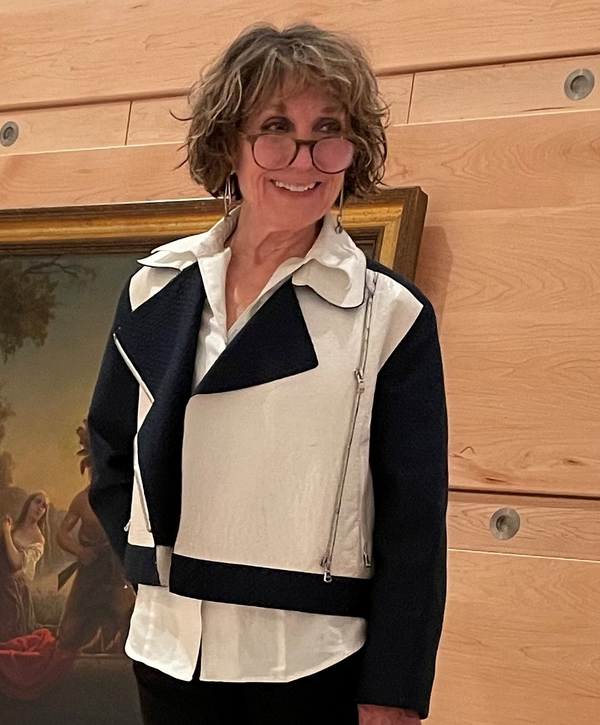
Angela Miller’s career as a scholar of the arts and visual culture spans from the 16th century to the late 20th, tracing the histories of colonization and nation-building, global fascism and war. Author of the prize-winning Empire of the Eye in 1993, she also led a team of scholars to bring the exceptionalist premise of so much scholarship in the field into line with the global turn in the field more generally. American Encounters (2008) engages the impact of multicultural encounters in shaping the arts of the United States and its antecedents. Her recent work on queer artistic networks around World War II will be published by Yale next year.
Sponsors:
The Art History Program
The Unit for Criticism and Interpretive Theory