Illinois Global Institute Reading and Research Presentation Day
- Sponsor
- Sponsored by the Illinois Global Institute and Cosponsored by the Center for East Asian and Pacific Studies
- Speaker
- Kaleigh Mueller, Patrick Buchanan and Sibel Arikoglu
- Registration
- Registration
- Contact
- Alex Chun (CEAPS Outreach Coordinator)
- park387@illinois.edu
- Originating Calendar
- CEAPS Events Calendar
Please join us on Reading Day, May 7th , for a day of studying, student research presentations, and plenty of food to fuel your brain and ideas to fuel your mind!
You can stop by briefly or bring your laptop, books, and notes and settle in for the day!
IGI Reading and Research Presentation Day
Thursday. May 7
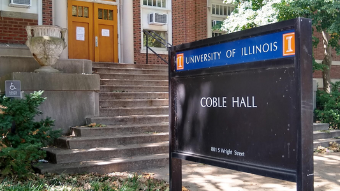
Coble Hall, Room 306
Schedule
9am – 11:45amm – Quiet Study with snacks
12pm – 2pm - Student Workshop of presentations with lunch
12:00pm Kaleigh Mueller, Global Studies, The Role of Rhetoric in North Korea's Juche Ideology
12:40pm Patrick Buchanan, CLACS, Flight, Feuds, and Tavernas, Intimacy between Enslaver and Police Control in Pelotas, Brazil, 1880-1888
1:20pm Sibel Arikoglu, Linguistics, Strategic Code Switching Among Turkish German Bilinguals
2pm – 4pm – Quiet Study with snacks
Presentations
Kaleigh Mueller, Global Studies, The Role of Rhetoric in North Korea's Juche Ideology
In July 1953, the Korean War ended with the signing of the armistice agreement that divided the peninsula into North and South. North Korea’s first leader, Kim Il-Sung, solidified the identity of the new nation through the creation of the Juche ideology, which emerged as a founding principle of North Korean politics, economics, and belief system. In existing literature on North Korea, Juche is commonly translated to “self-reliance” and is described as a combination of Confucian, Marxist-Leninist, and nationalist beliefs. Using discourse analysis and Campbell’s Critiques of Contemporary Rhetoric (1973), this research analyzes speeches by Kim Il-Sung and Kim Jong-Il to answer the questions: 1) How and why were the North Korean people influenced by Juche? And 2) what is the relationship between rhetoric and reality when it comes to Juche? This research’s findings provide a more comprehensible understanding of North Korean citizens’ experience and the pervasiveness of Juche’s control. It is anticipated that this research will provide a better understanding of the inner workings of North Korea and the experience of the people to a global audience.
Patrick Buchanan, CLACS, Flight, Feuds, and Tavernas, Intimacy between Enslaver and Police Control in Pelotas, Brazil, 1880-1888
In the 1870s and 1880s, Brazilian enslavers found ways to retain their labor force in the aftermath of abolition. Pelotas, Rio Grande do Sul, offers an interesting case study. Above all, enslaver and police authorities ensured that one or the other supervised the formerly enslaved. Criminal cases coupled with scholarship on Pelotas and Brazil situate the nature of freedom and control in abolition-era Pelotas. This presentation provides careful interpretations of the transition to freedom, as demonstrated in documents like the ones above. These are the early findings of an ongoing inquiry into the afterlives of enslavement in Pelotas. The goal of this work is to contribute an interpretation of the changes in social status and social control of the formerly enslaved. This research also contributes to a larger conversation about Afro-descendants and their access to legal, economic, and political freedoms from generation to generation up into the present. A historical analysis of the transitions from slavery to freedom is a significant point of embarkation for confronting and understanding legacies of enslavement in Brazil.
Sibel Arikoglu, Linguistics, Strategic Code Switching Among Turkish German Bilinguals
This study examines how Turkish German bilinguals in Germany use code-switching as a creative and rational resource for producing social meaning in diasporic interaction. Drawing on the Rational Choice framework (Myers-Scotton and Bolonyai,2001), the analysis shows that bilingual speakers strategically shift between Turkish and German to express affect, voice perspectives, and convey culturally specific meanings. For example, speakers use the German term Gastarbeiterzeit (guest workers’ era) rather than a Turkish equivalent because it carries historical, social, and emotional associations embedded in Germany’s migration context. The study highlights how bilingual creativity enables speakers to negotiate identity across linguistic and cultural borders.
If you would like to join us, registration is optional, but using the event registration link will help us get an idea of numbers for food.