
NPRE 596 Graduate Seminar Series - Sung-Jin Park
- Sponsor
- NPRE 596 Graduate Seminar Series
- Speaker
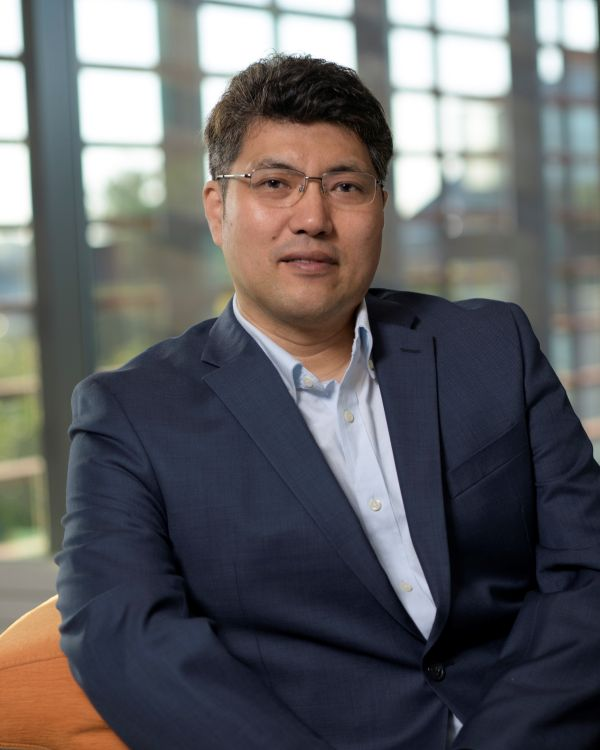
- Sung-Jin Park, Adjunct Research Professor, Nuclear, Plasma & Radiological Engineering
- Cost
- Free and Open to the Public
- nuclear@illinois.edu
- Phone
- 217-333-2295
- Views
- 15
- Originating Calendar
- NPRE seminars
Microplasma Photonics: Emerging Plasma Technologies for Communications, Microelectronics, Food Safety, and Healthcare
Low-temperature microplasmas are efficient and highly controllable sources of ions, electrons, reactive species, and photons. Among their many applications, microcavity plasma arrays are particularly attractive as compact photon sources because their geometry, gas composition, and operating conditions can be engineered to produce distinctive optical emission characteristics. This presentation will highlight recent advances in microplasma-based photonic technologies and their emerging applications in precision timing, millimeter-wave control, materials processing, power electronics, and disinfection. The first application is precision timekeeping. Microplasma-based mercury-ion lamps based on the ²⁰²Hg⁺ transition at 194.23 nm have been integrated into compact atomic-clock systems with volumes below approximately 100 cm³. These systems have demonstrated frequency stability approaching the 10⁻¹⁴level under optimized operating conditions, illustrating the potential of microplasma light sources for compact, high-performance frequency references relevant to navigation, communication, and advanced electronic systems.
Microplasmas can also be incorporated into three-dimensional photonic structures to provide electrically tunable millimeter-wave behavior. Filling dielectric channels with low-temperature plasma, particularly argon plasma, modifies the effective electromagnetic properties of the structure and produces measurable shifts in resonance frequency in the 120–170 GHz range. Microplasma-based Bragg structures can further enhance attenuation within selected frequency bands, demonstrating the potential for reconfigurable millimeter-wave and sub-terahertz components.
A second major area is deep-ultraviolet photochemistry and materials processing. Microplasma sources emitting photons below approximately 230 nm can initiate photochemical reactions and break selected chemical bonds in organic materials, enabling surface modification, patterning, and low-temperature materials synthesis. Such sources have also been investigated for room-temperature formation of dielectric materials, including SiO2 and Al2O3, from suitable molecular precursors. In addition, pulsed deep-UV microplasma sources can provide rapid optical triggering of high-voltage, wide-bandgap semiconductor devices, suggesting new approaches to electrically isolated and low-EMI switching in power-electronic systems. Far-UVC microplasma lamps based on KrCl* excimer emission near 222 nm represent another rapidly developing application. When appropriately filtered and operated within established exposure limits, these sources can provide continuous microbial inactivation in occupied environments while substantially reducing penetration into living tissue compared with conventional germicidal UVC. Laboratory and real-world studies in healthcare and food-processing environments have demonstrated reductions in airborne and surface microbial contamination, highlighting their potential for improving indoor environmental hygiene and food-process safety. Looking forward, further miniaturization toward chip-scale microplasma devices may enable localized delivery of photons, electrons, ions, and reactive species directly to chemical and biological systems. Such electronically controlled microplasma platforms could provide a pathway toward rapid, spatially selective, and dynamically tunable control of physical, chemical, and biological processes.
Bio: Prof. Sung-Jin Park is an Adjunct Research Professor in the Department of Nuclear, Plasma, and Radiological Engineering at the University of Illinois Urbana-Champaign. He has worked on microcavity plasma technology at the Department of Electrical and Computer Engineering in the University of Illinois since 1999, with research spanning large-scale microplasma arrays and their applications in flat-panel UV/VUV light sources, displays, microelectronics, photochemistry, and miniature chemical reactors.
Throughout his career, Prof. Park has led and contributed to numerous research and development programs focused on the application of microplasma science, technology scale-up, and commercialization. These efforts have been supported by the U.S. and Korean governments, as well as by industrial partners including Lockheed Martin and Samsung. Together with Dr. J. Gary Eden, he co-founded four technology start-ups, Eden Park Illumination, EP Purification, Cygnus Photonics, and EPL Power Electronics, and has played a leading role in translating microplasma technologies from laboratory research into commercial products and practical applications.
Prof. Park holds more than 100 patents and has authored or co-authored approximately 150 publications in the field. He received his Ph.D. in Chemistry from Myongji University in Korea and subsequently served as a postdoctoral research associate in Electrical and Computer Engineering at the University of Illinois.
In addition to his research and entrepreneurial activities, Prof. Park co-founded the Eden Park Foundation, which supports safe drinking-water projects and technical education initiatives in underserved communities across more than 30 countries. He has also served as a Project Professor at the University of Tokyo, Japan.
His honors include the Innovation Discovery Award from the University of Illinois in 2009, the Wells Fargo Grand Prize at the Clean Energy Challenge in 2014, and the Governor’s Export Award from the State of Illinois in 2018.