Warm Storage and Community-Based Memory Projects
- Sponsor
- Humanities Research Institute, Siebal Center for Design, American Indian Studies Program, Office of the Vice Chancellor for Access, Civil Rights & Community, Student Affairs
- Speaker
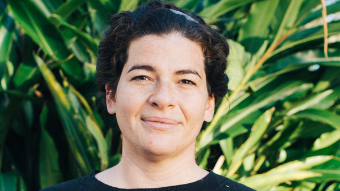
- Hali Dardar is an enrolled member of the United Houma Nation, and co-founder of the Houma Language Project and Bvlbancha Public Access
- Cost
- Free and Open to the Public
- Contact
- Korinta Maldonado
- korintam@illinois.edu
- Views
- 9
- Originating Calendar
- American Indian Studies Program
Materials are said to be in cold storage when they are placed where they can be stabilized and cared for long term. These places are generally not easily accessible, but guarantee accessibility over a longer span of time and contexts. Cold storage is a promise of longevity, and a reference to disembodiment.
Cold storage is necessary and core part of memory care as it makes room for things in the moment. This talk and workshop is considering those things. Warm Storage is a 90-minute lecture and 90-minute workshop focused on community memory in this moment. It aims to provide stories and references to support the transfer, care, and storage of community memory within the current day’s constraints, technology, and needs.
Grassroots archives begin often without knowing they are archives. They are created to collect and communicate memory beyond the bounds of temporal human sharing. This lecture takes the form of a story and shall share stories of the Houma Language project community archiving practice as an experience from the ad hoc edge of archival practices from the perspective of relational accountable research theories. It will present a personal, candid narrative of entering the archival field while tracing encounters to expand on significant and ongoing complications within the relationship between community-based cultural heritage cohorts and research missions and outcomes.
The goal of the lecture is to present one path through the landscape, and open a discussion of how better paths can be forged by the audience in the future. The audience will leave with a personal example of a community-archive project, an ability to articulate how academic research impacts the work of community-based groups, and an opportunity to consider their agency as students in forming research processes.
Bio
Hali Dardar is an enrolled member of the United Houma Nation, and co-founder of the Houma Language Project and Bvlbancha Public Access. Her works explore interaction design, new media art, and community process.
Dardar works at the intersection of media, memory, and community with roots in the Gulf South. Her experience spans community-centered media production, cultural documentation, and collaborative systems design, including building digital archives, conducting long-format interviews, and writing that links history to the present.
She is currently a Center for Louisiana Studies Fellow at the University of Louisiana (2026-2030), and an Indigenous Data Champions Fellow (2026). She has previously led collaborative project management and design for Language Vitality Initiatives at the Smithsonian Center for Folklife and Cultural Heritage, Shift Collective, and the Louisiana Endowment for the Humanities. She holds a BA in print journalism from Louisiana State University and an MA in Arts, Culture, and Media from the University of Groningen.